

When choosing funny science t shirts as a gift, I'd start with the joke the person already has the knowledge to enjoy. Liking science gives you a starting point, but it doesn't tell you whether they'll prefer a number sequence, a grumble about Pluto or a word dressed up as an element. Those are three quite different senses of humour.
You don't need to share their interests to choose well. You need enough of the reference to recognise why it might suit them. I'll explain these three designs just far enough to make that decision, without turning buying a T-shirt into homework.
The useful clues are probably things you already know: the puzzles they choose, the subjects they bring up, or their willingness to keep a terrible pun going long after everyone else has stopped encouraging it.
Choosing funny science t shirts by the joke
I'd separate two questions before looking at the designs: will they understand it, and is it their sort of funny? Someone can know exactly what a sequence means without wanting it on their chest. Equally, someone doesn't need a science qualification to enjoy a complaint about the number of planets.
For these three, I'd think in terms of recognition, nostalgia and wordplay. The Fibonacci design asks the reader to spot a familiar pattern. Nine Planets plays on the difference between something remembered from school and the classification used now. Irony Element borrows the appearance of scientific information for a visual pun.
That gives you something more precise than buying for “the clever one”. Think about what they enjoy doing with their knowledge. If they like working things out, look closely at Fibonacci. If they enjoy remembering how things used to be, read the Pluto line. If they like words behaving badly, the pretend element deserves a look.
I wouldn't choose whichever reference seems most advanced. There's no prize for buying a joke that requires the longest explanation, and difficulty isn't what makes any of these designs work. The aim is a reference that feels familiar to the wearer.
Fibonacci for someone who spots the pattern
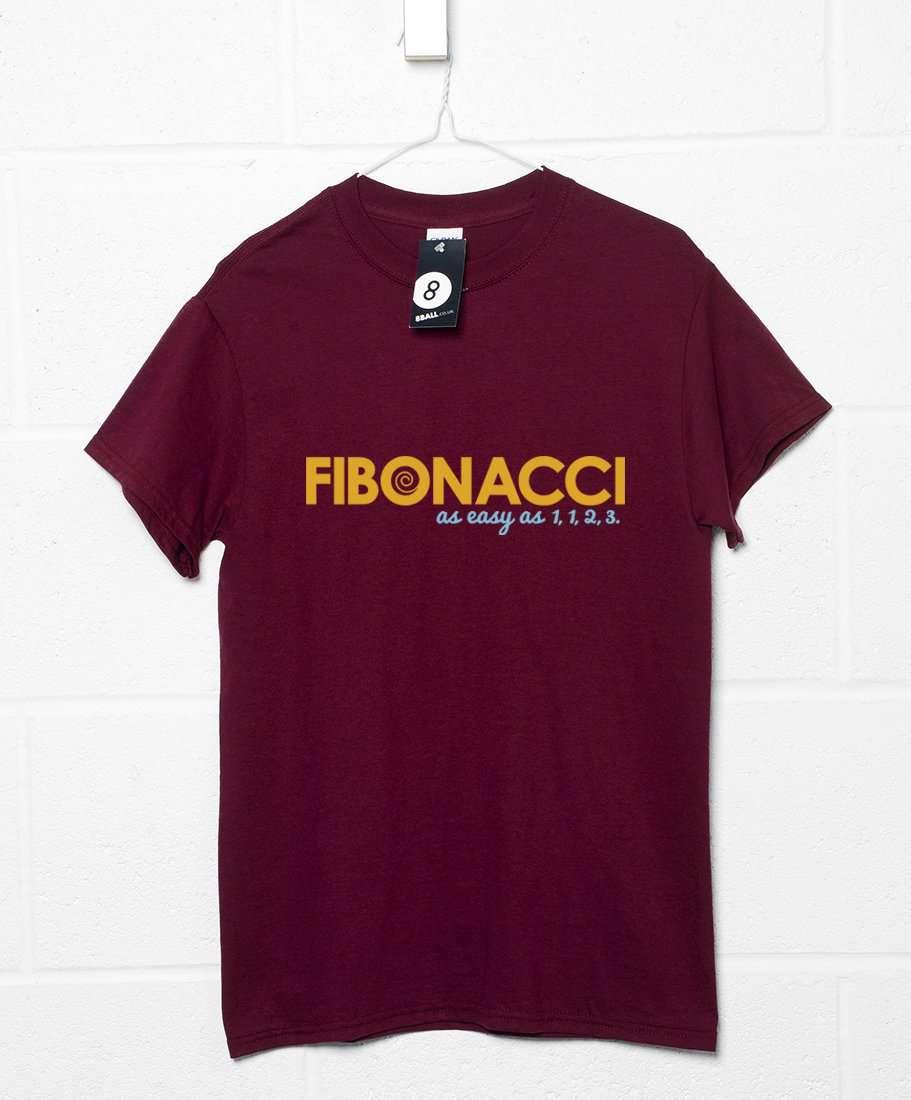
The Fibonacci Easy as 1 1 2 3 T-Shirt takes the familiar “easy as 1, 2, 3” phrase and slips another 1 into it. That extra number is the point. Read it as an ordinary count and it looks wrong; recognise the Fibonacci sequence and the wording makes sense.
In the Fibonacci sequence, each number is the sum of the previous two. Starting with 0 and 1 gives you 0, 1, 1, 2, 3, 5, 8 and so on. The design's 1, 1, 2, 3 follows that pattern. You can see the rule at work straight away: 1 plus 1 gives 2, then 1 plus 2 gives 3.
That's enough maths to understand the joke. The familiar phrase provides the setup, and the sequence changes what “easy” looks like. I wouldn't add a grand explanation to the gift. The small change in the numbers does the work.
I'd consider this for someone who enjoys number puzzles or likes spotting a rule in something that initially looks odd. Knowing they already recognise Fibonacci is a stronger clue than simply knowing they were good at maths at school.
If their science interest is mainly space, animals or experiments, I wouldn't assume the numbers will appeal. Ask yourself whether they'd notice the extra 1 and want it there. That is a more useful test than whether they could follow the explanation afterwards.
Nine Planets for the person who remembers Pluto differently
The Back In My Day We Had Nine Planets T-Shirt gives you more of the joke in the wording. It uses the familiar “back in my day” complaint, then applies it to the Solar System. Apparently even the planets aren't what they used to be.
The reference is Pluto's classification. In 2006, the International Astronomical Union classified Pluto as a dwarf planet. NASA also describes Pluto as a dwarf planet. The line on the shirt looks back to the nine-planet version of the Solar System that the wearer may remember learning.
Pluto didn't disappear. Its classification changed, which is why the wording works as a nostalgic complaint. You don't need to explain the full classification criteria to give someone this design, and wearing it needn't amount to taking a scientific position.
I'd put this ahead of Fibonacci for someone whose interest in space comes with an attachment to the things they learnt growing up. The strongest clue is that the nine-planet memory means something to them. Age alone doesn't tell you that.
It also asks a different thing of the wearer. Fibonacci quietly changes a sequence; this one makes a statement in their voice. Would they enjoy presenting themselves as someone with a grievance about Pluto? If that sounds like their humour, you've got a reason to choose it beyond the broad fact that they like astronomy.
Irony Element for someone who enjoys the visual pun
The Irony Element T-Shirt uses a periodic-table-style presentation for its joke. Irony isn't a real element. The scientific format is part of the wordplay, so this is a design to read as a visual pun rather than a piece of chemistry information.
That distinction matters when choosing it. Recognising the periodic-table style gives the reader a way into the joke, but enjoying puns is the better buying clue. I wouldn't choose it solely because someone works with chemistry or remembers the elements.
I'd lean towards it for someone who likes a word borrowing the appearance of something official. You don't need to turn the gift into a discussion about the definition of irony. The useful question is whether this particular combination of word and format appeals to them.
If you're torn between the three, return to what you know about the person. I'd choose Fibonacci for pleasure in a pattern, Nine Planets for a remembered Solar System and a mock complaint, or Irony Element for the wordplay.
You can find more designs in Proud to Be a Geek Clothing, but I'd keep that same approach while browsing. Choose the reference that connects with something they already enjoy. A gift feels more considered when you can say why this design made you think of them.